How to clean vinyl, tile, marble and timber floors
Vacuum first, then mop with a well wrung mop and the right cleaner for the floor: mild for vinyl and timber, pH-neutral for marble, a little stronger for tiles.
By the HomeMaster team · · 4 min read
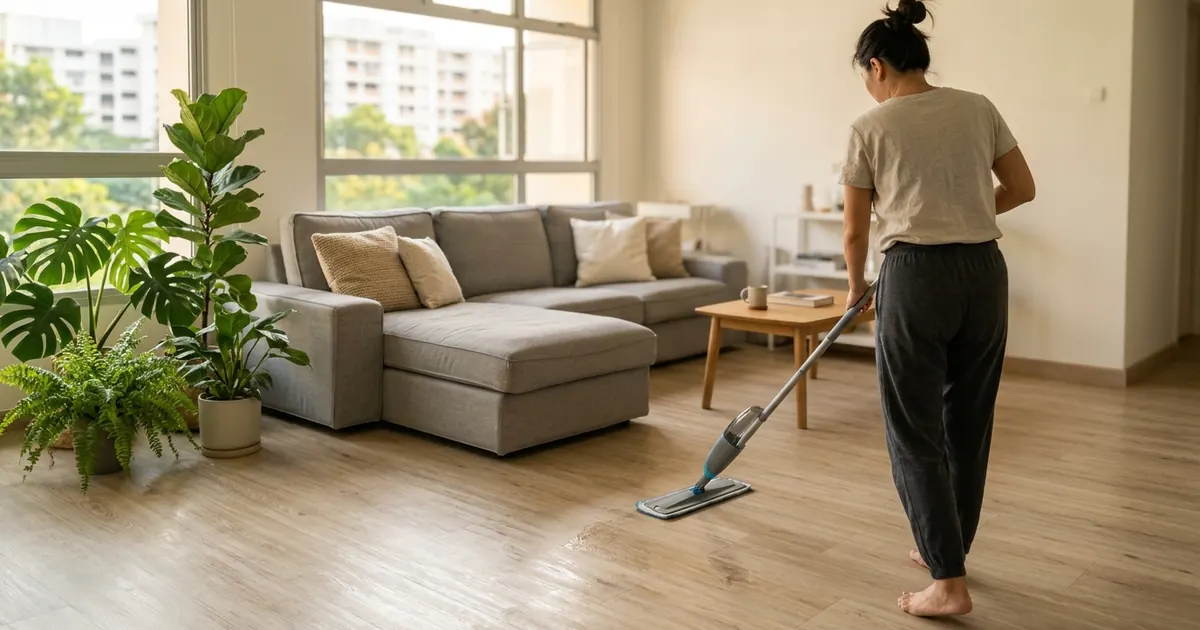
The right way to clean a floor depends on what it is made of, but the order is always the same. Vacuum or sweep first, then mop with a well wrung mop and a cleaner that suits the surface. Vinyl and timber want a damp mop and a mild cleaner. Marble and other natural stone need a pH-neutral cleaner and nothing acidic. Ceramic and porcelain tiles can take a slightly stronger floor cleaner, with a brush along the grout lines when they darken.
Singapore homes often mix floors. A newer HDB flat may have vinyl in the bedrooms and ceramic tiles in the kitchen and bathrooms; an older condo may have marble; a renovated living room may have timber. This guide goes through each one, the mistakes that shorten a floor's life, and how often to clean. Floors are also the biggest job in a regular home cleaning visit, so if mopping eats your weekend, that is where help saves the most time.
The basics for every floor
- Remove grit first. Vacuum or sweep before mopping. Sand and dust act like sandpaper under a wet mop.
- Wring the mop well. A damp mop cleans; a dripping mop leaves streaks and pushes water into joints.
- Use the right amount of product. Follow the label. Too much cleaner leaves a sticky film that attracts dirt.
- Work towards the door, so you do not walk across the floor you have just done.
- Change the water when it turns grey. Mopping with dirty water just spreads it.
- Let it dry before walking on it, or open the windows and run a fan.
Floor by floor
Vinyl floors
Vinyl, including the luxury vinyl tiles and planks common in BTO flats and renovations, is tough on the surface but sensitive at the joints.
- Use a mild floor cleaner diluted as directed, or warm water with a few drops of dishwashing liquid.
- Mop damp, not wet. Water left standing can seep between planks and loosen them.
- Avoid steam mops unless the floor maker says they are safe. Heat and moisture can damage the joints and the wear layer.
- Skip abrasive pads and harsh solvents, which can dull or scratch the top layer.
- Wipe spills quickly, especially near the kitchen.
Ceramic and porcelain tiles
Glazed tiles are the most forgiving floor in the home. Most floor cleaners are fine on them.
- Mop with a general floor cleaner, diluted as the label says.
- Brush the grout lines every few weeks with a stiff brush. Grout is porous and darkens long before the tiles do.
- Rinse if the floor feels sticky after mopping. Go over it again with clean water.
- Matte or textured tiles, common in bathrooms for grip, hold more dirt in their surface; a brush or a textured mop head works better than a flat cloth.
For bathroom floors, grout and the drain area, see our guide to cleaning bathroom grout in a humid home.
Marble, granite and terrazzo
Natural stone is beautiful and porous, and it reacts to acids.
- Use a pH-neutral cleaner or one made for natural stone. Plain warm water also works for routine mopping.
- Never use vinegar, lemon, limescale removers or bleach-based cleaners on marble. Acids can etch the surface and leave dull patches that need a specialist to restore.
- Wipe up spills straight away, especially wine, coffee, juice and cooking oil, which can stain.
- Use a soft mop or microfibre pad, not a scrubbing brush.
- Dry the floor after mopping to avoid water marks.
Marble that has lost its shine overall needs polishing, which is a specialist trade with its own machines, not part of a regular clean.
Timber and engineered wood
Solid timber and engineered wood floors dislike water more than any other floor.
- Dust mop or vacuum often, with a soft brush head.
- Mop with a barely damp cloth and a cleaner made for sealed wood floors, if you mop at all.
- Never leave water standing on timber. It can swell the boards and lift the edges.
- Avoid steam mops and oil soaps unless the floor maker recommends them.
- Put felt pads under chair legs to prevent scratches.
How often to clean floors
| Area | Vacuum or sweep | Mop |
|---|---|---|
| Kitchen | Daily or every other day | Weekly, plus spills as they happen |
| Living and dining | A few times a week | Weekly |
| Bedrooms | Weekly | Weekly or fortnightly |
| Bathrooms | When needed | Weekly, as part of the bathroom clean |
| Balcony | Weekly | When dusty or after heavy rain |
Homes with pets, small children or a window facing a busy road may need more. Our guide to a simple house cleaning schedule shows how floors fit into the rest of the week.
When to bring in help
Floors are the job that takes the longest in most homes, because every room has one. A regular home cleaning visit takes care of the vacuuming and mopping, including under movable furniture and into the corners. Your own floor care shrinks to quick spot cleans between visits.
How it works with HomeMaster
Floors appear in every area of the written 75-point standard our cleaners work to:
- Bathrooms: floors, corners and drain areas free of hair and watermarks
- Bedrooms: floors, including under the bed and table
- Kitchen: floors free of oil, including under movable items
- Living and dining: floors under furniture, with items put back where they were
- Balcony: the floor and the drain
You can see every point on our home cleaning checklist.
You provide a working vacuum and mop, always. Your cleaner brings cloths, brushes and a multi-purpose cleaner. Does your floor need a particular product, such as a stone cleaner for marble or a cleaner for sealed timber? Leave it out and tell Helen, our AI assistant on WhatsApp, when you book. Heavy furniture is cleaned around rather than moved.
Frequently asked questions
What is the best way to mop a vinyl floor?
Vacuum first, then mop with a well wrung mop and a mild floor cleaner or warm water with a few drops of dishwashing liquid. Keep the mop damp rather than wet so water does not seep between the planks. Avoid steam mops and abrasive pads unless the floor maker says they are safe.
Can I use vinegar to clean floors?
Diluted vinegar is fine on glazed ceramic and porcelain tiles. Never use it on marble, granite, terrazzo or other natural stone, because the acid can etch the surface. It is also best avoided on timber and many vinyl floors; use the cleaner the floor maker recommends instead.
Why are my floors sticky after mopping?
Usually too much cleaner, or mopping with water that had turned dirty. Use the amount the label says, change the water when it goes grey, and go over the floor once more with clean water. A sticky residue attracts dust and makes the floor look dirty again sooner.
Need a hand at home?
Tell Helen what you need on WhatsApp. She replies with real open times and the exact price, GST included, and weekends cost the same as weekdays.