How to clean a washing machine and stop the smell
Wipe the rubber seal, clean the detergent drawer and lint filter, run an empty hot wash with a machine cleaner, and leave the door open to dry after every load.
By the HomeMaster team · · 4 min read
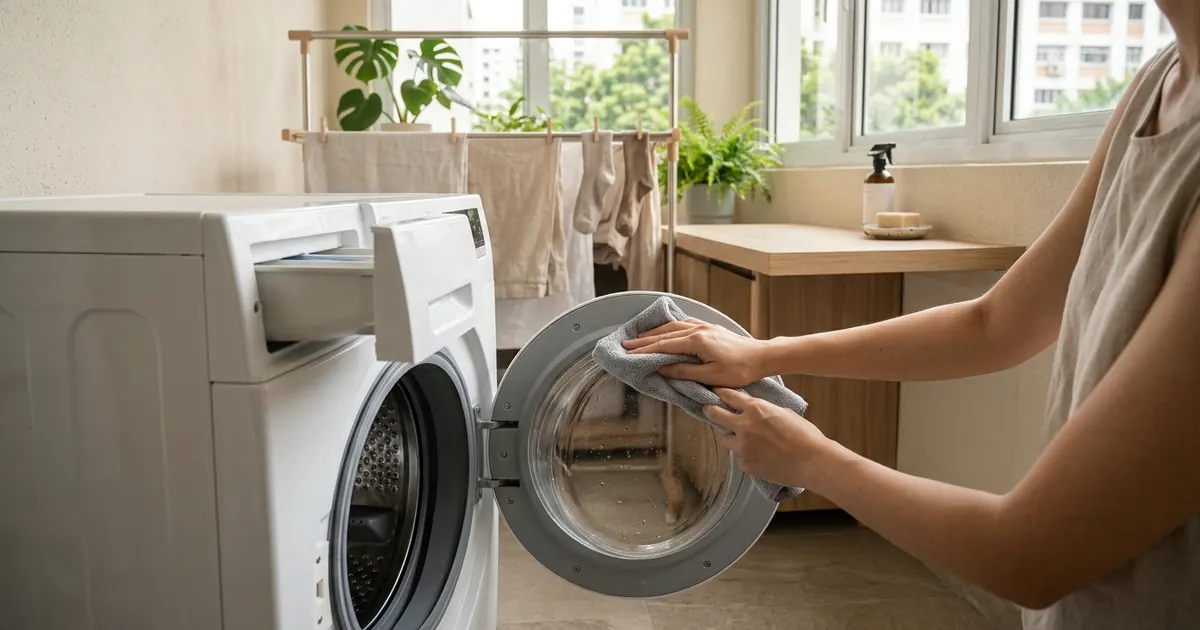
To clean a washing machine, wipe out the rubber door seal, wash the detergent drawer and clear the lint filter. Then run an empty wash at the hottest setting with a washing machine cleaner. Dry the seal and leave the door open afterwards. Done once a month, with the door left open after every load, this keeps the machine from smelling and your clothes from coming out musty.
In Singapore's climate, a washing machine is one of the dampest places in the home. This guide covers why machines smell, the steps for front loaders and top loaders, and the small habits that stop the problem coming back. Laundry, with the machine's seal and filter checked, can also be part of a regular home cleaning visit on request.
Why washing machines smell
The smell comes from mould and bacteria living on leftover detergent, fabric softener and lint in the parts of the machine that stay wet. The usual places are:
- The rubber door seal on a front loader, where water and fluff sit in the fold
- The detergent drawer and the channel behind it
- The lint or drain filter at the bottom of the machine
- The underside of the drum, which you cannot see
Humidity makes it harder for these parts to dry. The Meteorological Service Singapore puts the mean annual relative humidity at around 82%. A closed machine in a service yard can stay damp from one wash to the next.
How to clean it, step by step
What you need
- A washing machine cleaner, or the cleaning product your machine's manual recommends
- An old toothbrush or detail brush
- Two cloths, one damp and one dry
- A shallow tray and an old towel, for the filter
- Your machine's manual, or its model number to look it up
Front loader
- Wipe the door seal. Pull back the fold of the rubber seal and wipe all the way round with a damp cloth. Remove hair, coins and fluff. For dark spots, use a little washing machine cleaner or a mould product suitable for rubber, following its label, then wipe it clean.
- Clean the detergent drawer. Most drawers pull out with a press of a release tab. Wash it in warm soapy water with a brush, and brush out the slot it sits in, where softener goes sticky.
- Clear the filter. Switch the machine off at the wall. Put the tray and towel under the small hatch at the bottom front, open it, and let the water drain. Unscrew the filter, remove lint and anything caught in it, rinse it, and screw it back firmly. Check your manual first, since the steps vary by model.
- Run a cleaning cycle. With the drum empty, add the machine cleaner as its label says and run the drum-clean programme, or the hottest long wash your machine offers.
- Wipe and dry. Wipe the drum, seal and door glass with a dry cloth, and leave the door open.
Top loader
- Wipe the lid, the top rim and the agitator with a damp cloth.
- Remove the lint catcher, usually a small mesh bag or tray on the side of the drum, and rinse it.
- Clean the detergent and softener dispensers with a brush and warm water.
- Run a hot cycle with the drum empty and a washing machine cleaner, following its label.
- Leave the lid open to dry.
Habits that stop the smell coming back
- Leave the door and the detergent drawer open after every load until the inside is dry.
- Take washing out straight away. Wet clothes left in the drum smell within hours.
- Use the right amount of detergent. More than the label says leaves residue that the machine cannot rinse away.
- Run a hot wash now and then, for towels or bed linen, which helps keep the inside fresh.
- Wipe the seal dry after the last load of the day.
If the smell remains after a full clean, the drain hose or the pipe it runs into may be the source. That is a job for a technician or a plumber.
Washing machine safety
- Switch off at the wall before you open the filter or touch any internal part.
- Expect water when you open the filter, even on a machine that seems empty.
- Use one product at a time, and do not mix a machine cleaner with bleach or another cleaner. The National Environment Agency (NEA) advises not mixing different disinfectant products, and using them in a well-ventilated area.
- Keep detergent pods and cleaners out of reach of children. Our guide to safer cleaning products covers storage.
Damp laundry and the rest of the home
A clean machine is only half of fresh laundry. Clothes that dry slowly indoors in humid weather can smell musty even after a clean wash. Spacing items out on the rack, running a fan nearby and bringing laundry in as soon as it is dry all help. Our guide to preparing your home for the monsoon has more on drying clothes indoors when it rains for days.
How it works with HomeMaster
Laundry and ironing are one of the six areas in the written 75-point standard our cleaners work to, done on request within the time you book. It includes machine hygiene: the drum, lint filter and rubber seal are wiped and checked. Clothes are sorted by colour and fabric with pockets checked, stains are pre-treated, and the machine is not overloaded. You can see every point on our home cleaning checklist, and our guide to laundry and ironing with a part-time cleaner explains how to fit it into a visit.
If you would like laundry done as part of your home cleaning visits, tell Helen, our AI assistant on WhatsApp, when you book so there is time for it. Leave out the detergent and softener you prefer.
Frequently asked questions
How often should I clean my washing machine?
Once a month for most households: wipe the seal, wash the detergent drawer, clear the filter and run an empty hot cycle with a machine cleaner. If you wash every day, or often use cold cycles only, you may want to do it every two to three weeks. Leaving the door open after each load matters just as much.
Why do my clothes smell after washing?
Usually either the machine itself is harbouring mould in the seal, drawer or filter, or the clothes stayed damp too long. Clean the machine, take washing out as soon as the cycle ends, and dry it with space between items. Using less detergent can also help, since leftover residue holds odour.
Can I clean a washing machine with vinegar?
It depends on the machine, so check the manual first: it says which cleaning products are safe for your model and its rubber seals. A washing machine cleaner made for the job is the safe default. Whatever you use, never combine it with bleach or another cleaner in the same cycle.
Sources
- Climate of Singapore, Meteorological Service Singapore
- List of Active Ingredients for General Disinfection, National Environment Agency
Need a hand at home?
Tell Helen what you need on WhatsApp. She replies with real open times and the exact price, GST included, and weekends cost the same as weekdays.