How to clean a fridge, inside and out
Empty one shelf at a time, wash removable parts in warm soapy water, wipe the inside and door seal, dry everything, and get rid of smells for good.
By the HomeMaster team · · 5 min read
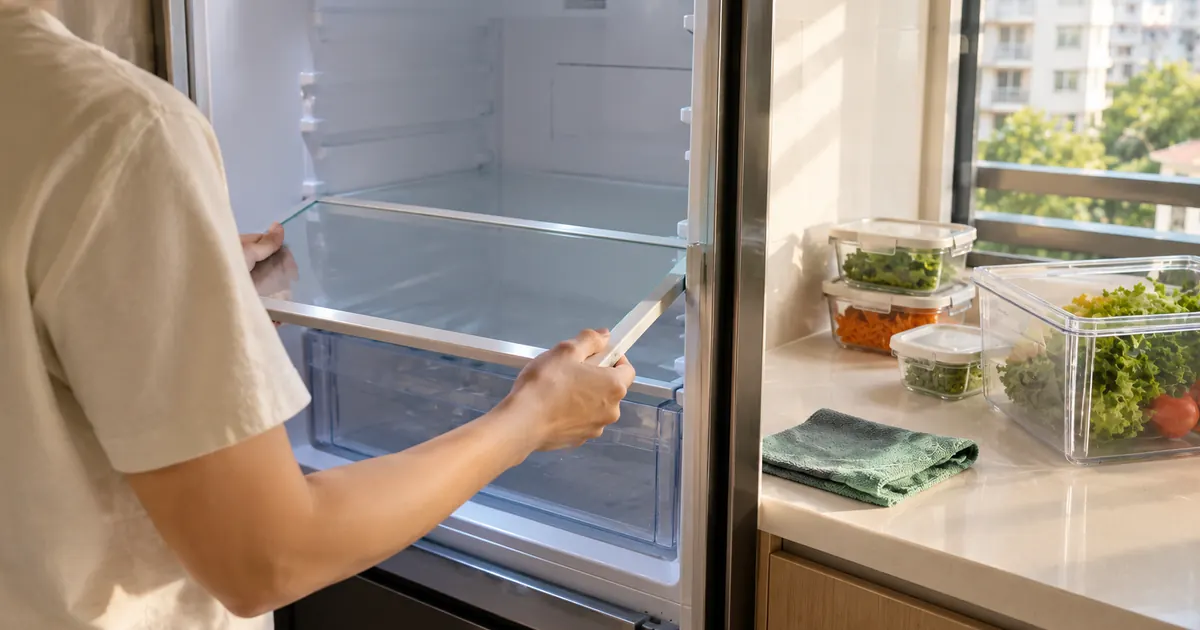
To clean a fridge, take the food out one shelf at a time and wash the removable shelves and drawers in warm soapy water. Then wipe the inside walls and the rubber door seal, and dry everything before you put food back. For most fridges that is all it needs. A full clean once a month, plus a quick wipe of spills when they happen, keeps it fresh.
This guide covers the steps in order, smells and mould on the seal, and keeping the fridge clean in between. A fridge wipe-down also fits into a regular home cleaning visit, if you would rather hand it over.
How to clean a fridge, step by step
What you need
- Warm water with a little dishwashing liquid
- Two soft cloths, one for washing and one for drying
- An old toothbrush or detail brush for the door seal and drawer runners
- A cool bag or a box to hold food while you work
- Baking soda, if there is a smell to deal with
Skip strong-scented sprays and bleach inside the fridge. They can leave a smell that butter, rice and cut fruit pick up, and you will be eating near those surfaces every day.
The steps
- Pick the right moment. Just before a grocery run is ideal, when the fridge is at its emptiest.
- Check dates as you go. Throw out anything past its date, leftovers you will not eat, and sauces that have separated or smell off.
- Work one shelf at a time. Move that shelf's food into the cool bag, clean the shelf, and put the food back before starting the next one. This keeps food out of the cold for minutes rather than an hour.
- Wash removable parts. Glass shelves and plastic drawers go in the sink with warm soapy water. Let cold glass warm up a little first; very hot water on cold glass can crack it.
- Wipe the inside walls, working from the top down so drips land on parts you have not cleaned yet. Pay attention to the back wall and the corners of the bottom drawer, where liquid collects.
- Clean the door shelves. Bottles drip, and the door racks are where sticky rings build up.
- Do the door seal. Run a cloth or soft brush along every fold of the rubber seal. Crumbs and damp gather in there.
- Dry everything. A dry cloth over every surface stops water marks and gives mould nothing to grow on.
- Put food back sensibly. Raw meat and seafood on the bottom shelf, cooked food and leftovers above, and nothing pressed against the back wall where air needs to circulate.
- Wipe the outside last, including the handle, the top of the fridge and the front of the freezer.
Getting rid of fridge smells
A smell almost always has a source: a forgotten container, a spill under a drawer, or a door seal that has started to grow mould. Cleaning removes the source; masking the smell does not.
- Find the source first. Check under the crisper drawers and at the back of the bottom shelf.
- Wash the drawers, not just wipe them. Liquid from vegetables pools underneath.
- Leave an open box of baking soda on a shelf once the fridge is clean. It absorbs light odours over the following weeks.
- Cover strong food. Durian, cut onion and fish paste need a sealed container.
If a smell stays after a full clean, the drip tray or the drain hole at the back of the fridge may be blocked. Your fridge manual will show where it is and how to clear it.
Mould on the door seal
In Singapore's humidity, the rubber seal is where fridges most often go mouldy. The Meteorological Service Singapore puts the mean annual relative humidity at around 82%, and a seal that is opened many times a day never fully dries.
Clean the seal with warm soapy water and a soft brush, working into each fold, then dry it well. For spots that will not shift, a mould product suitable for rubber can be used, following its label and rinsing afterwards. Avoid harsh scrubbing, which can tear the seal. A seal that is torn, or that no longer holds the door firmly shut, should be replaced; the fridge will work harder and the inside will stay damp.
The freezer
Most modern freezers are frost-free and need the same wipe-down as the fridge, a few times a year. If yours builds up ice thicker than about a centimetre, it needs defrosting. Switch it off, move the food into a cool bag, put towels down, and let the ice melt on its own. Never chip at ice with a knife; it is an easy way to puncture the cooling pipes.
Keeping it clean between cleans
- Wipe spills straight away. A spill takes seconds to wipe while it is fresh and much longer once it has dried.
- Use containers with lids, and line the vegetable drawer with a paper towel you can change.
- Do a two-minute check before shopping, throwing out what has expired.
- Store raw food low. The Singapore Food Agency (SFA) advises storing raw meat and seafood at the bottom of the fridge, and keeping raw food apart from cooked or ready-to-eat food.
When a cleaner can help
A wipe of the fridge shelves and surfaces fits into a normal home cleaning visit. A full clear-out, with every shelf taken out and every container sorted, is a bigger job. If you want that done, empty the fridge of anything you would rather sort yourself, or tell your cleaner it is the priority for that visit. Our guide to what a home cleaner does explains where the fridge sits among the other grey areas, such as the oven.
How it works with HomeMaster
The fridge is part of the kitchen section of the written 75-point standard our cleaners work to: its exterior and interior should be free of oil, dust, stains and odours. You can see every kitchen point on our home cleaning checklist.
If you want a full fridge clear-out on a particular visit, tell Helen, our AI assistant on WhatsApp, before the day so your cleaner can plan the time. A one-off clean before a move, a party or a festival is a good moment for it.
Frequently asked questions
How often should I clean my fridge?
Give it a full clean about once a month, and wipe up spills as they happen. A quick check before each grocery run, throwing out anything expired, keeps the monthly clean short. If you store a lot of raw meat or seafood, clean the bottom shelf more often.
What is the best thing to clean the inside of a fridge with?
Warm water with a little dishwashing liquid handles most of it. Rinse with a clean damp cloth and dry everything. Avoid bleach and strongly scented sprays inside the fridge, because food can pick up the smell. A box of baking soda helps absorb light odours afterwards.
Why does my fridge smell even after cleaning?
Check under the crisper drawers, the door seal and the drain hole at the back, where liquid can collect unseen. A forgotten container is the usual cause. If the smell stays after all of those are clean, the drip tray may need clearing; the fridge manual shows how.
Sources
- A recipe to ensure safe food for all, Singapore Food Agency
- Climate of Singapore, Meteorological Service Singapore
Need a hand at home?
Tell Helen what you need on WhatsApp. She replies with real open times and the exact price, GST included, and weekends cost the same as weekdays.